
How to build strong partnerships with HCPs – Three part series
TL;DR
This blog outlines practical strategies to help pharma and biotech teams build stronger partnerships with healthcare professionals (HCPs). It emphasises the importance of understanding HCP behaviours, motivations, and digital preferences. The piece also highlights how personalised communication, data-driven insights, and high-quality digital engagement can foster trust, improve relevance, and drive long-term collaboration.
PART 1 – Understanding HCP behaviours, challenges, and motivations.
Whether you’re a Brand Manager, a Communications Director or a Marketing Director, if you work in a pharma or biotech company you know that the pressure to find new and better ways to communicate with healthcare professionals is always there.
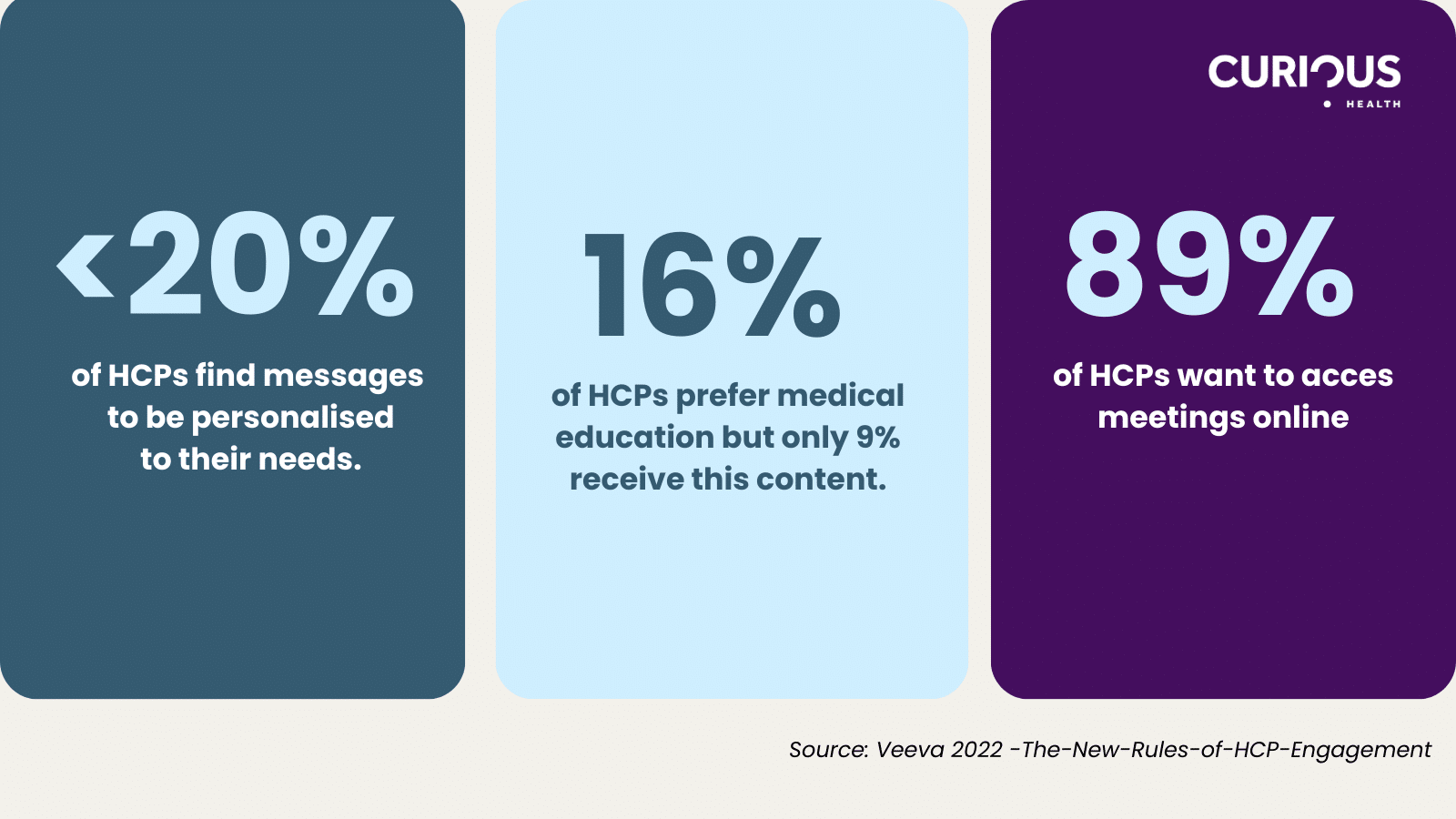
There is no one-size-fits-all approach for engaging with healthcare professionals, but personalisation of communication is a top factor in doctor satisfaction with pharma.[1]
How do you begin evolving your strategy for HCP engagement?
Analysing the behaviour of healthcare practitioners is always a good start.
By understanding the demographics, motivations, pain points, influencers they listen to, and their goals you can develop more effective communication strategies.
But how do you do this? Review the data you have access to; what are your market research and insights colleagues working on? Do you have social media data that covers the therapy area you’re particularly interested in? What can your digital colleagues tell you about visitor data to the HCP sections of your website? Do you have a communications agency in place who can advise you on how you might gather these insights? Hint – we’re good at this stuff at Curious Health, curious by name, curious by nature, after all
Let’s have a look at their behaviours…
HCPs are a diverse group, with a wide range of ages, and interests. They come from all walks of life and have different experiences and perspectives. While demographic data is helpful, we need to look closer.
While there is variation between specialities and individual HCPs, research shows that there are some clear trends emerging with how HCPs like to consume information and interact with pharmaceutical companies. Our biggest takeaway from the research in this area? Ultimately, we need to remember that HCPs are people!
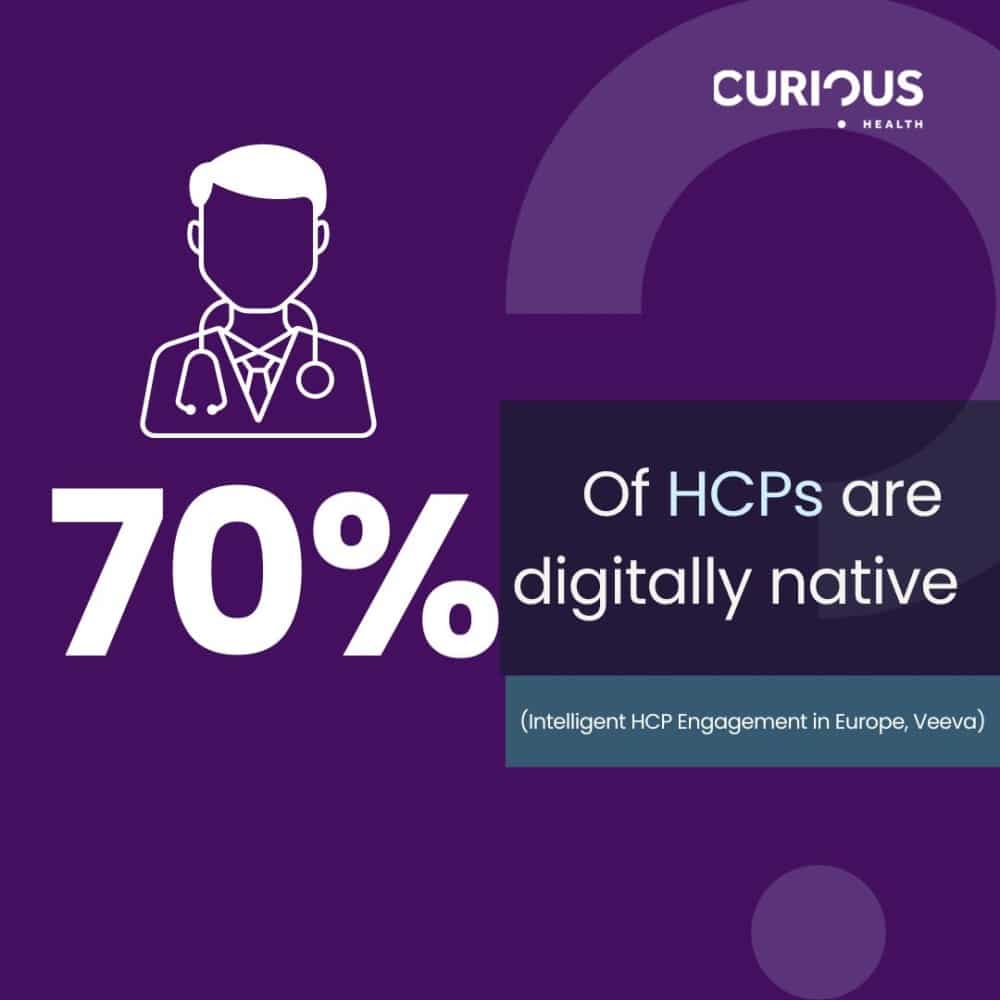
An increasing number (70%) are digitally native, like the broader population, and rely on digital channels as a primary information source. Ignore this “digital first” preference at your peril. [2]
As digital natives, they prefer to:
- Turn to digital sources for information first
- Control the information they consume
- Trust peers’ opinions
- Generate social and other content, serve as influencers and potential advocates
- Participate in high-quality digital interactions [2]
HCPs are increasingly using online channels to stay up to date on the latest medical research, connect with colleagues, and learn about new products and services. Your information needs to live online.
What do HCPs want? Do they ever want to see a sales rep again?
The way that HCPs want to engage with pharma companies, specifically, is changing. In the past, HCPs were happy to receive one-way communication from pharma reps, but now they want more control over the way they receive information.
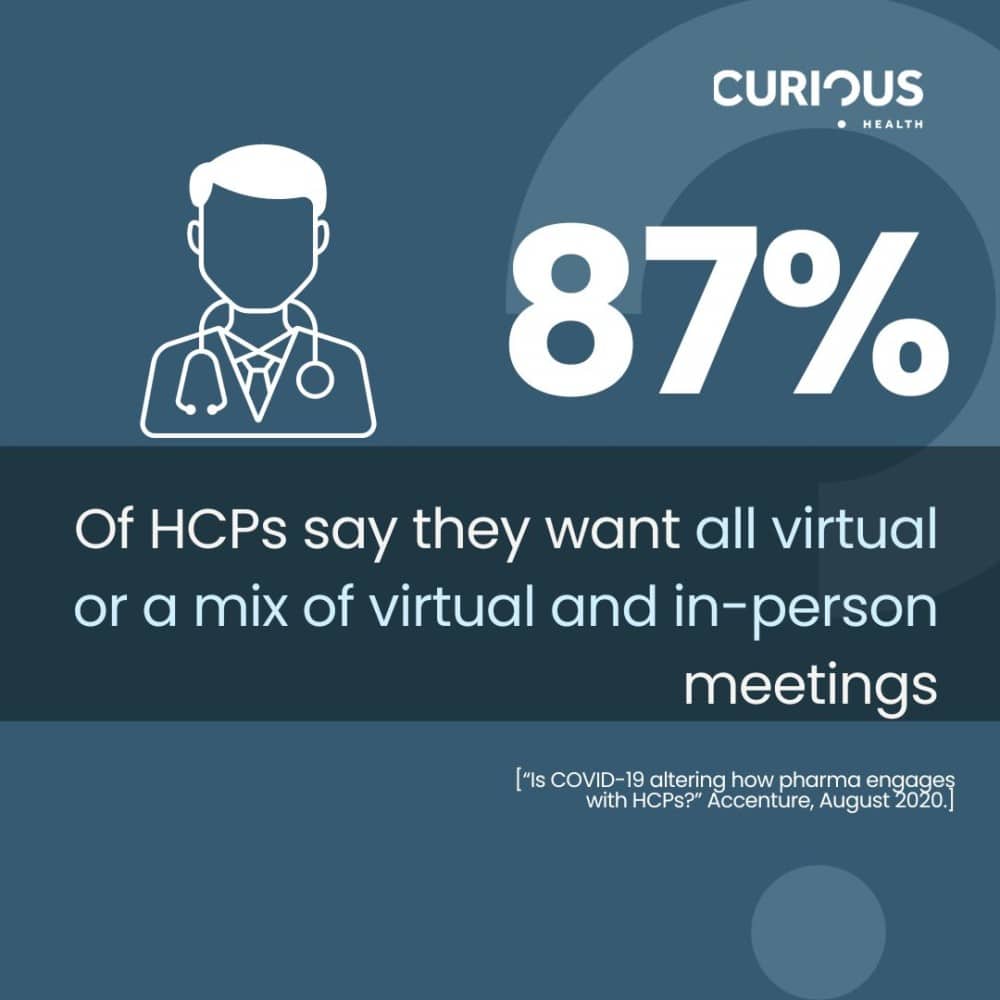
87% of HCPs say they want all virtual or a mix of virtual and in-person meetings with pharma representatives [3]
When interacting with industry, HCPs favour “flexible, convenient communications” and the ability to use digital engagement tools like virtual chat (36%) and apps (34%) [2]
Because of these changes, companies find traditional communication models initiated by pharma are less effective. In a recent report, 66% of respondents said companies would move away from the traditional sales rep model due to the perceived low return on investment. [4]
Most pharma companies believe they are trying to relate to HCPs according to their preferences, but the data suggests there is room for improvement. With each pharma company managing its own tools, portals, channels, and applications, the reality is that it’s becoming more challenging for HCPs to find the relevant, personalised information they need.
Here are some of the challenges HCPs report when engaging with pharma:
What does this mean?
It means that pharma companies should focus on giving HCPs the information they need, when they need it, and in the way they want it. We need to remember the preference for “digital first” content, with options for in-person engagement as well.
And that brings us to how we, Curious Health Communications Ltd, can help…
We know just how important it is to treat HCPs as people, mapping the latest trends and digital tools against their needs, all whilst reassuring your compliance colleagues. Our sweet spot is coming up with content and engagement strategies that will be focused on making your content available and discoverable for HCPs in the most user-friendly way.
Here are some ways we can help:
- Create a knowledge base or FAQs that HCPs can access on demand. This would give them the information they need, when they need it, and in the way they want it.
- Analyse social media conversations to identify trends, insights, and influencer opportunities. This would help us to understand how HCPs are talking about your products and services, what their pain points are, what they would like to see from your company and which KOL can have a positive impact on your campaign.
- Monitor your competitive landscape. This would help us to see what other pharma companies are doing on social media and how you can differentiate yourself.
- Plan, create, and manage your social media presence. This would include creating content that is relevant to HCPs, engaging with them in a meaningful way, and measuring the effectiveness of your campaigns.
Let’s wrap things up, it’s essential to embrace the evolving dynamics of HCP engagement. While traditional face-to-face interactions and events hold their significance, the preference for digital can’t be ignored. And it all starts with understanding, deeply, your audience’s motivations, pain points and needs. By grasping the essential patterns in how HCPs behave online, pharma companies can craft communications that cut through the noise and build authority. It is crucial to create content that aligns with their needs and interests and present it in a manner that is both convenient and user-friendly for them.
Stay ahead of the curve and drop us a line at st*********@***********th.io to discuss how you can elevate your HCP engagement game.
Because HCPs are not a monolith. They vary in age, specialty, and digital fluency. By analysing their behaviours like how they consume content, what influences their decisions, and what challenges they face, pharma teams can tailor communications that feel relevant and respectful. It’s about meeting HCPs where they are, not where we assume they’ll be.
It means recognising that most HCPs now turn to digital channels first, whether for clinical updates, peer discussions, or product information. They expect seamless, high-quality online experiences. If your content isn’t accessible digitally, or if it’s hard to find or navigate, you’re likely missing out on meaningful engagement opportunities.
Start by using data, market research, website analytics, social media insights to understand what each HCP cares about. Then, tailor messaging to their specialty, interests, and preferred formats. For example, a cardiologist might prefer clinical trial summaries, while a GP might want practical prescribing guidance. Personalisation shows you respect their time and expertise.
Yes, but not in the same way as before. The majority now prefer virtual or hybrid formats that give them more control over when and how they engage. They’re looking for value not just a sales pitch. That means reps need to come prepared with relevant insights and be ready to listen, not just talk.
Assuming that one message fits all. Generic outreach can feel impersonal and irrelevant. The most successful teams invest in understanding their audience, crafting tailored content, and delivering it through the right channels. It’s not about volume,it’s about value.