More than you can imagine: where rare disease and health inequity intersect
TL;DR
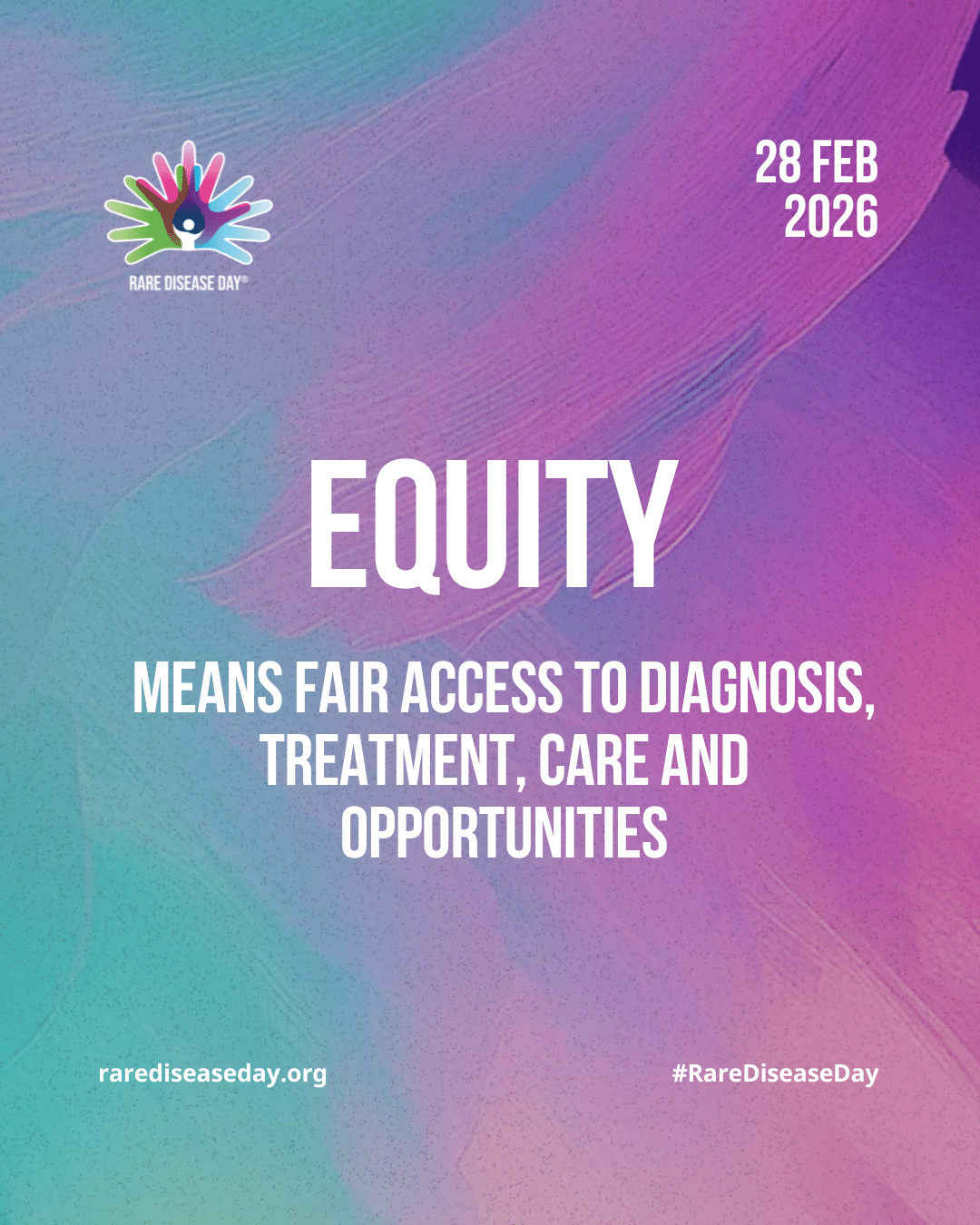
As Rare Disease Day approaches and prompts conversations around awareness and visibility for rare conditions, it also creates a space to reflect on the barriers that too often remain hidden. Through our recent work in rare diseases, and driven by our passion for health equity, we found ourselves returning to one question: what does equity really look like for people living with rare conditions?
Applying a health equity lens to rare diseases
Rare diseases are too often seen and treated as exceptional or peripheral. A single condition may be very uncommon, affecting only a very small number of people. But if we take a broader perspective, with over 6,000 rare conditions currently identified[i], rare diseases are collectively common: in the UK, around 3.5 million people live with a rare condition, and it’s estimated that around 1 in 17 of us will be affected at some point in their lives[ii]. Worldwide, this amounts to 300 million people,[i] almost the population of the United Stated, the third largest country in the world. Suddenly, these ‘rarities’ feel a lot more systemic and closer to us all.
The World Health Organization defines equity as the absence of unfair, avoidable or remediable differences between groups. In practice, this means designing systems that account for different needs and burdens, especially when people do not fit “standard” care pathways.
But when healthcare systems are designed around what is common, people living with what is rare can be left navigating delays, fragmentation and invisibility. This is not only a rare disease challenge. This is a health equity challenge.
What are the barriers affecting rare disease care?
The health inequities experienced by people with rare diseases are often predictable and structural, and dot their whole treatment journey. These come on top of well-known barriers in their chances to live fulfilling lives, from achieving the career they’d love to finding a partner, from travelling the world with a disability to imagining their future as parents. When a condition is poorly understood, people can be dismissed or underestimated, and unhelpful stereotypes or misinformation can hinder their inclusion in society.
A long journey to diagnosis. Many people experience years of uncertainty, repeated referrals, or misdiagnosis, because clinical expertise is thinly spread and symptoms do not map neatly onto common-condition pathways. The burden often shifts to families to join the dots, chase appointments, and explain the condition again and again. We’ve heard many stories of people for whom the diagnosis was a ‘lucky’ coincidence: coming across the ‘right’ specialist who had seen a person with similar symptoms before, or the ‘right’ list of specialised centres, at a time when the Internet wasn’t yet around. If access to information has significantly improved over the past 20 years, thanks to the unwavering work of advocacy groups, clinicians and ‘expert’ patients, many families on this journey are still confronted with information that is too technical, fragmented, not accessible, or not available in the formats and languages they need. Similarly, the family doctors, nurses or A&E clinicians who may first come across a person with symptoms they can’t explain still need simple tools they can use in their day-to-day practice to activate the right referrals.
Geographical barriers. When a condition affects a small number of people, then expertise naturally gravitates around a small number of centres of excellence. For the individuals and families involved, this often means long journeys, additional costs and postcode variations in access. Even when centres of excellence exist and deliver good care, if they are not effectively coordinated with the regional services people need to access on their day-to-day, physicians may lack the confidence or information needed to deliver safe, consistent care close to home. For example, people living with Osteogenesis Imperfecta, a condition that causes bones to be brittle and fracture easily, have often shared with us their fear of fracturing far from their centre of excellence, and being taken to a local A&E that may not know how to successfully treat them.
Lack of care coordination. Rare conditions frequently involve multiple specialties and long-term monitoring. Without coordination, people and carers need to step up and manage their own care. This role is clearly not for everyone, and can compound challenges like health literacy, digital exclusion, and socio-economic pressures on caregivers. We’ve heard from the communities we’ve worked with how transitions from paediatric to adult services often mean losing the ‘warm wing’ of their trusted paediatrician, and feeling lost and abandoned.
A broken pathway to treatment. For many rare conditions, a long-awaited diagnosis doesn’t translate in access to suitable treatment: around 95% of rare diseases still lack an approved therapy.[iii] Even when new drugs are discovered, that does not mean people will receive timely access to them, and the country they live in can significantly affect their chances. Between 2020 and 2023, for example, only 50% of EMA-approved non-oncology orphan medicines were reimbursed in England, compared with 85% in Germany, 74% in Italy and 67% in France.[iv]
Health communications as a system enabler for rare diseases
We cannot redesign healthcare systems through communications alone. But the impact of health comms can go much further that of awareness campaigns. Well-designed healthcare communications can play a pivotal role in creating visibility, promoting understanding and recognition (from the general public to non-specialised physicians and policy makers), and fostering inclusion and systemic change:
- Make the invisible visible. When campaigns are co-created with the rare disease communities, they can help to surface hidden burdens, both for decision-makers and the wider public, and promote a representation of the condition that feels true to the people living with it, not simplified or stereotyped. This can help on many fronts, from better inclusion in society, to more holistic care, to fairer health-technology assessments of new treatments.
- Shift the narrative. People stories can deeply touch the public and promote understanding or support fundraising efforts. But if rare diseases are systemic, health comms can help to shift the narrative from the individual or family involved towards a cumulative ‘system challenge’, that deserves a joined-up solution for all the people facing similar barriers.
- Reduce information inequity. Health communicators can design resources keeping readability, accessibility, health literacy and digital exclusion top of mind. They can also become enablers along that dauting treatment journey, building resources that help people navigate what happens next: pathway explainers, appointment prep tools, transition guides and materials for carers, teachers and employers. This means the understanding and inclusion go beyond the doctor’s office and bring positive change in society.
- Support earlier recognition. Non-specialised HCPs, who need to divide their attention among many (mostly common) conditions, need support and resources to better understand rare diseases, and, most crucially, recognise those red flags and referral triggers that can drive quicker diagnoses. Greater awareness can also help those families in joining to dots or promptly seeking help.
So, what does equity look like for people with rare diseases?
The key ingredients of more equitable care for rare diseases include:
- Earlier and fairer diagnosis, clearer referral routes
- Coordinated care by design, relieving the burden on families and caregivers
- Accessible information everyone can use to manage their condition and materials co-created with the communities, reflecting lived experiences
- Meaningful access, from care closer to home to quick access to new treatments when these become available
- Lived experience embedded in decision-making, and feedback loops that improve services
While some of these elements require significant shifts in the way healthcare systems are designed, others are within reach, and it’s also down to us to contribute to a fairer, more inclusive experience for all.
The impact of health inequities in rare diseases is multifaceted and often hidden, but when these conditions are looked at collectively, the urgency of action cannot be ignored. If rare diseases are ‘more than you can imagine’, then our response must be too: more coordinated, more inclusive, and, most importantly, more equitable.
If you’d like to hear more or want to take action, drop us a line at st*********@***********th.io
[i] Nguengang Wakap, S. (2020), European Journal of Human Genetics, 28(2), pp. 165–173.
[ii] Department of Health and Social Care (2025), England Rare Diseases Action Plan 2025. Available at: https://www.gov.uk/government/publications/england-rare-diseases-action-plan-2025/england-rare-diseases-action-plan-2025-main-report (Last accessed: February 2026).
[iii] European Commision (2025), Collaboration: A key to unlock the challenges of rare diseases research. Available at: https://op.europa.eu/en/publication-detail/-/publication/c85cfbb5-f58f-11ef-b7db-01aa75ed71a1 (Last accessed: February 2026).
[iv] BIA (2025), Improving access to innovative medicines for rare diseases. Available at: https://www.bioindustry.org/resource/improving-access-to-innovative-medicines-for-rare-diseases.html (Last accessed: February 2026).